

Apr 16th 2026
7 Expert Tips for Scaling Your Cottage Bakery Business
Growing a home-based bakery into a more productive, profitable operation takes more than great recipes. As the demand picks up, your processes, equipment, and planning need to keep pace. These expert tips for scaling your cottage bakery business focus on practical ways to increase output, stay organized, and maintain consistent quality.
Whether you’re preparing for a busy season or steady long-term growth, the right systems help your kitchen run smoothly and keep customers coming back.
Develop a Production Plan That Supports Growth
Scaling successfully starts with structure. As order volume rises, working one order at a time quickly becomes inefficient and hard to manage. A clear production plan helps you move from reactive baking to a more controlled workflow.
Start by mapping out your weekly and daily production schedule. Break tasks into stages such as mixing, proofing, baking, and packaging so that you can focus on one step at a time. This keeps your pace steady and reduces downtime between tasks.
To make your plan more effective, assign realistic time blocks based on batch size and equipment capacity. For example, mixing several batches in a row before baking helps you avoid constantly switching tasks. Batching helps you keep production moving without unnecessary stops.
It also helps to build in a bit of buffer time. Equipment delays, prep work, or last-minute changes can slow things down. Planning for those moments helps you stay on track without rushing.

Standardize Recipes and Processes for Consistency
Consistency becomes more important as your bakery grows. Customers expect the same flavor, texture, and presentation every time they order, no matter how busy you are.
Standardizing recipes ensures each batch turns out the same. Document exact measurements, mixing times, baking temperatures, and finishing steps so nothing is left to guesswork. Small variations can become noticeable when production increases.
It’s just as important to standardize your processes. From prepping ingredients to portioning dough and packaging finished items, clear workflows help you maintain quality while increasing output.
As your operation expands, these processes also make training easier. If you bring on help, clear instructions reduce mistakes and keep everything aligned with your standards.
Upgrade Equipment To Handle Higher Volume
As production increases, your equipment needs to keep up. Common household kitchen tools often struggle under heavier demand, which can slow you down and lead to uneven results.
Upgrading to commercial equipment improves both speed and reliability. These machines are built for continuous use and help reduce manual effort, making it easier to keep up with orders.
Consider equipment that supports efficiency and consistency, including:
- Commercial mixers with a larger bowl capacity
- Convection ovens for even heat distribution
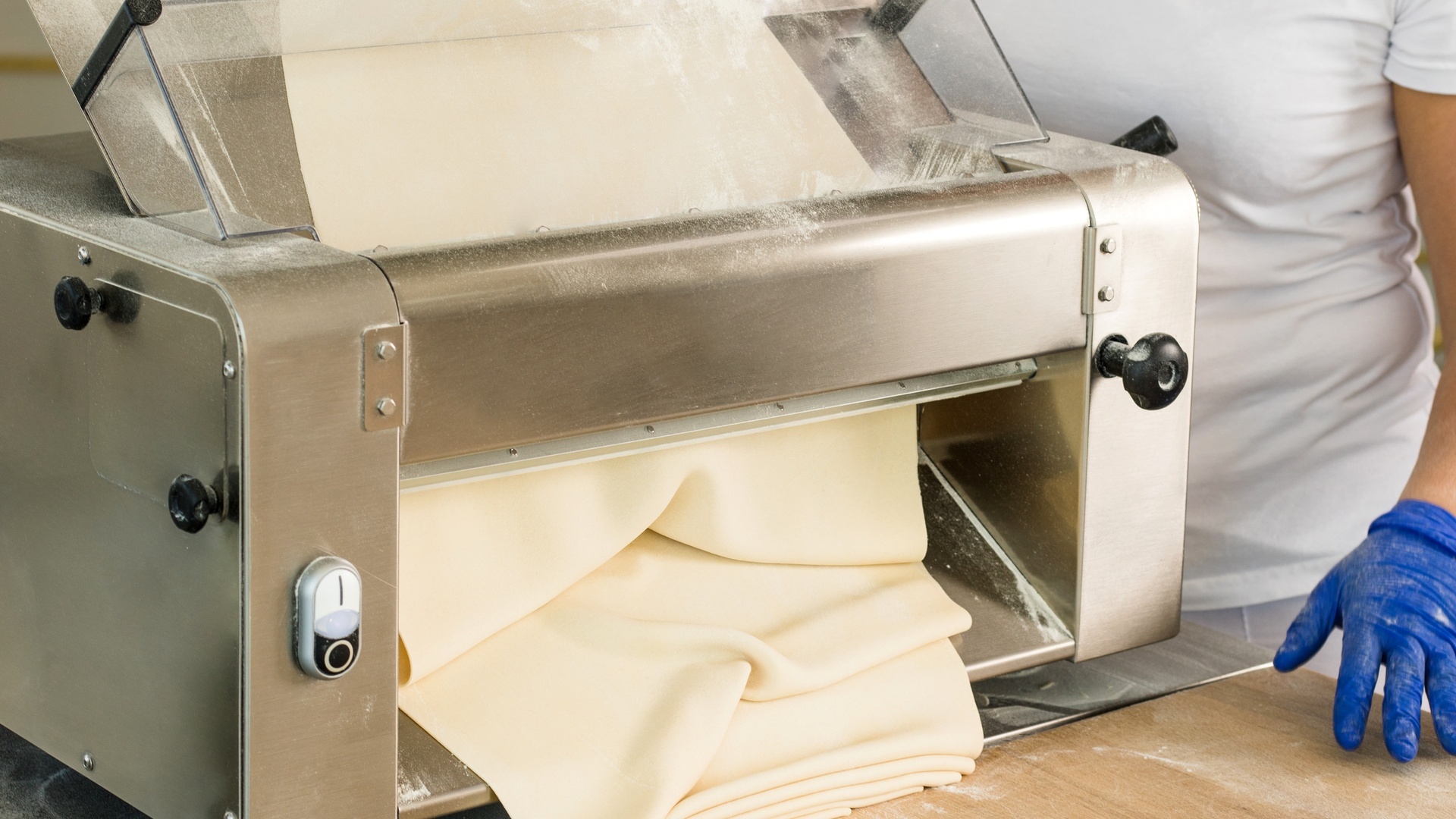
- Dough sheeters for consistent thickness and faster prep
- Refrigeration units that maintain stable temperatures
- Prep tables designed for organized workflows
When evaluating equipment, focus on output rather than just size. A larger mixer or oven lets you produce more per batch, which reduces total production time. That becomes especially important during peak periods.
It’s also worth thinking about consistency. Equipment like a dough sheeter helps you achieve uniform results across every batch, which is difficult to maintain by hand at higher volumes.
Improve Your Kitchen Layout for Better Workflows
As your production grows, your kitchen layout has a bigger impact on daily efficiency. A poorly organized space leads to wasted movement and unnecessary delays.
Arrange your workspace so it follows a natural flow from storage and prep to baking and packaging. Keeping related tasks close together minimizes back-and-forth movement and keeps everything within reach.
Think about how you move through your kitchen during your busiest hours. Small adjustments to the layout or storage system can make a noticeable difference in how smoothly everything runs.
Clear work zones also help if more than one person is working in the space. Defining areas for prep, baking, and finishing keeps tasks organized and prevents overlap.
Strengthen Inventory and Supply Management
Managing inventory becomes more complex as your bakery scales. Running out of key ingredients or packaging can interrupt production and delay orders.
Create a system for tracking usage and setting reorder points for essential items. Pay close attention to high-use supplies, like flour, sugar, butter, and packaging, so you can restock anything before you run out.
It’s also important to plan for variability. Supplier delays, seasonal demand, and price changes can all affect your inventory, so staying ahead helps keep production steady.
Keeping a small backup stock of critical ingredients can also prevent disruptions, especially during busy periods.
Refine Pricing and Order Management Strategies
Scaling your bakery should also support long-term profitability. As production increases, your pricing and order management approach should reflect the added workload.
Review your pricing to ensure it covers both ingredient costs and your time. Higher volume often means longer hours and increased overhead, so your pricing should support sustainable growth.
At the same time, simplifying how you accept orders can make a big difference. Too many custom orders can slow production and increase the chance of errors.
To keep things manageable, consider:
- Setting minimum order quantities for custom items
- Offering pre-set menu options for popular products
- Establishing clear order cutoff dates and pickup windows
- Limiting last-minute changes to confirmed orders
These adjustments help you balance demand with your production capacity and keep your workflow under control.
Build Systems That Support Long-Term Growth
Sustainable growth depends on systems that keep your bakery organized and efficient. Without clear processes, even small increases in demand can create confusion and burnout.
Focus on building repeatable systems for scheduling, production planning, inventory tracking, and customer communication. These systems make it easier to manage higher volumes without losing control.
When everything works together, your operation becomes more stable and easier to scale. Applying these expert tips for scaling your cottage bakery business helps you build a setup that can handle growth with confidence.
Set Up Your Bakery for Sustainable Success
Scaling your cottage bakery is an exciting step, but it requires the right balance of planning, equipment, and systems. By improving your workflow, standardizing processes, and investing in reliable tools, you can meet growing demand while maintaining the quality your customers expect.
If you’re ready to expand your production, Pro Restaurant Equipment offers commercial-grade solutions tailored for growing bakeries. From mixers to dough handling equipment, our team provides expert advice you can trust to help you choose equipment that fits your needs and supports your success.