
Oct 20th 2026
Making Sausage From Scratch: What You Should Know
Making your own sausage gives restaurant kitchens greater control over flavor, texture, and ingredient quality. Instead of relying on premade products, chefs can develop custom blends that complement their menus and meet customer preferences. However, successful sausage production requires more than combining ground meat with spices. Understanding the ingredients, preparation methods, and equipment helps kitchens create consistent results from one batch to the next.
What Meat Works Best for Homemade Sausage?
The meat you choose affects everything from the sausage's flavor to its texture. Pork shoulder makes an excellent starting point because it offers a good balance of lean meat and fat. Beef chuck also works well, while chicken and turkey provide alternatives for kitchens looking to expand their offerings.
Fat plays an equally important role in sausage production. Most traditional fresh sausages contain approximately 20 to 30 percent fat, which contributes moisture and helps prevent a dry, crumbly texture. Leaner blends require careful preparation to maintain their juiciness.
How Should You Season Sausage?
Seasoning gives sausage its distinctive character, whether you're preparing Italian links, breakfast patties, or spicy chorizo. Salt enhances the meat's natural flavor while helping proteins bind together for a cohesive texture. Other ingredients depend on the sausage style and your desired flavor profile.
When making sausage from scratch, start with a tested recipe and measure ingredients by weight rather than volume. Before preparing an entire batch, cook a small portion to check the seasoning. This simple test allows your team to adjust the flavor without wasting ingredients.
What Equipment Do You Need to Make Sausage?
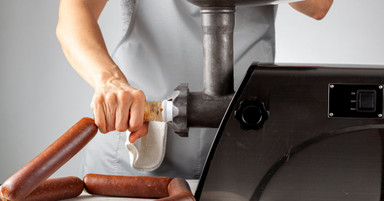
Proper equipment helps kitchens maintain an even grind and work efficiently during preparation. While smaller operations may rely on countertop grinders, restaurants handling larger quantities often benefit from industrial meat grinders that accommodate greater production demands. A basic sausage-making setup includes several essential tools:
- Meat grinder: Processes chilled meat into uniform pieces with the desired texture.
- Sausage stuffer: Fills casings evenly while helping minimize trapped air.
- Digital scale: Measures ingredients accurately for consistent batches.
- Food-safe containers: Keep ingredients organized and support proper handling during preparation.
Choose equipment according to your production volume and available workspace. A grinder with interchangeable plates also gives your kitchen flexibility when preparing different sausage varieties.
Why Does Temperature Matter During Preparation?
Temperature control protects both food safety and product quality. Warm meat can smear during grinding, creating a pasty texture instead of the distinct particles that give fresh sausage its characteristic bite.
Keep meat and fat thoroughly chilled before grinding, and refrigerate equipment components when practical. Work in manageable batches to limit the time ingredients spend outside refrigeration, and maintain meat at 40 degrees Fahrenheit or below during preparation. Follow applicable food safety requirements throughout processing and storage.
Find the Right Equipment for Your Sausage Production
Producing fresh sausage in-house offers an opportunity to customize your menu while maintaining control over ingredients and preparation. Reliable equipment makes the process more manageable, particularly as production demands increase.
Pro Restaurant Equipment offers a selection of name-brand commercial meat processing equipment at competitive warehouse pricing. Explore our equipment options online, or contact our team for expert guidance on choosing the right machines for your kitchen.